Home>Bridging Borders and Disciplines: Sciences Po Interns at UBC Reflect on their CARE Program Experience


6 October 2026
Bridging Borders and Disciplines: Sciences Po Interns at UBC Reflect on their CARE Program Experience
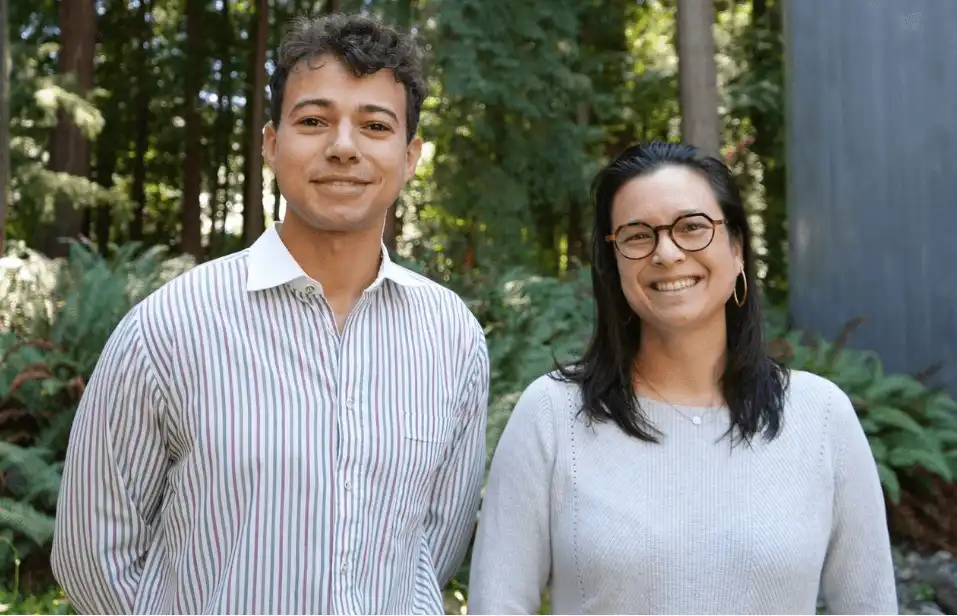
This summer, UBC's School of Public Policy and Global Affairs welcomed Master’s students Thibaud Zrein and Carlo Feruglio from PSIA as part of the CARE Internship Program.
Each student intern brought a unique academic background and personal motivation to their work, with projects that reflected the interdisciplinary and globally engaged nature of the program.
Thibaud Zrein
Having limited exposure to research projects prior to the program, Thibaud was interested in seeing how interning in the CARE Program would differ from his past professional experiences and help him grow. He was eager to engage with sustainability and climate issues after his work in development finance introduced him to these areas. “The goal of the CARE program is to work on sustainability, planetary boundaries and climate change. Those are themes I really identify with and I want to build my career around. I want to work in a field that has a concrete impact.”
Thibaud Zrein had just completed a Masters in International Economic Policy specializing in Asian Studies at Sciences Po, then worked under the guidance of Dr. Juliet Lu on a project which examined how mapping agricultural commodity-driven-deforestation can be used to implement zero-deforestation initiatives (ZDIs).

The project, titled Tracing Forest Risk Along Commodity Chains (TRACC), looked at how commodities like cocoa and rubber can not only lead to deforestation, but also how sustainability initiatives such as the European Union Deforestation Regulation (EUDR) actually monitor such deforestation.
Some of Thibaud’s responsibilities on this project included conducting literature reviews, analyzing rubber trade data to create maps, and compiling a database of initiatives around rubber and cocoa sustainability.
“The goal of the CARE program is to work on sustainability, planetary boundaries and climate change. Those are themes I really identify with and I want to build my career around. I want to work in a field that has a concrete impact.”
Carlo Feruglio
Carlo is a second-year Master’s student in the Sciences Po-Bocconi Dual Degree, studying International Development with a specialisation in Quantitative Methods. During his time as a CARE intern, Carlo worked with Dr. Joséphine Gantois and with students in the Environmental Economics and Ecology research group. The project involved identifying and analysing programs, regulations and, more generally, farmer-directed information channels.
While Carlo’s background is in development economics, CARE represented an opportunity to explore a new area of learning: “I [wondered] if maybe there may be an opportunity at the intersection of environment [or] sustainability and economics and policy research.”

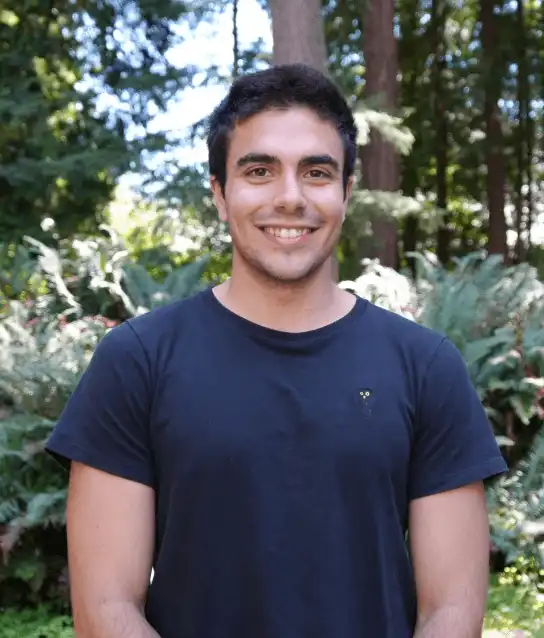
Carlo’s project focused on understanding the adoption of environmental best management practices in agriculture, particularly those related to on-farm habitats and fertilizer management. The work involved creating a database of agricultural programs available to Ontario landowners that support practices such as pollinator habitats, windbreaks, nutrient management and phosphorus reduction, as well as studying how local agricultural media discuss these topics.
Carlos shares, “Agriculture is going to be essential in the future years to fight climate change and biodiversity loss… There’s a massive movement of agricultural stewardship around the adoption of these practices that are aiming to support habitats and reduce fertilizer usage.”
In spite of the challenges the work presented, Carlo developed greater confidence in his work through regular meetings, feedback, and support from his supervisor. He says, “It’s very rewarding to see the database that I [developed] make sense and contribute to something.”
“Agriculture is going to be essential in the future years to fight climate change and biodiversity loss… There’s a massive movement of agricultural stewardship around the adoption of these practices that are aiming to support habitats and reduce fertilizer usage.”