Home>Building Urban Resilience: A Closer Look at Initiatives Around the World - 2026 Edition


24 November 2026
Building Urban Resilience: A Closer Look at Initiatives Around the World - 2026 Edition
Launched in June 2026, The CARE Urban Resilience Project, led by Professor Gabriel Eidelman, Associate Professor and Director of the Urban Policy Lab at the Munk School of Global Affairs and Public Policy, and Anastasia Jakub, Student Program & Project Officer, brought together students from the CARE partner institutions to research and share case studies of innovative urban resilience projects from around the world.
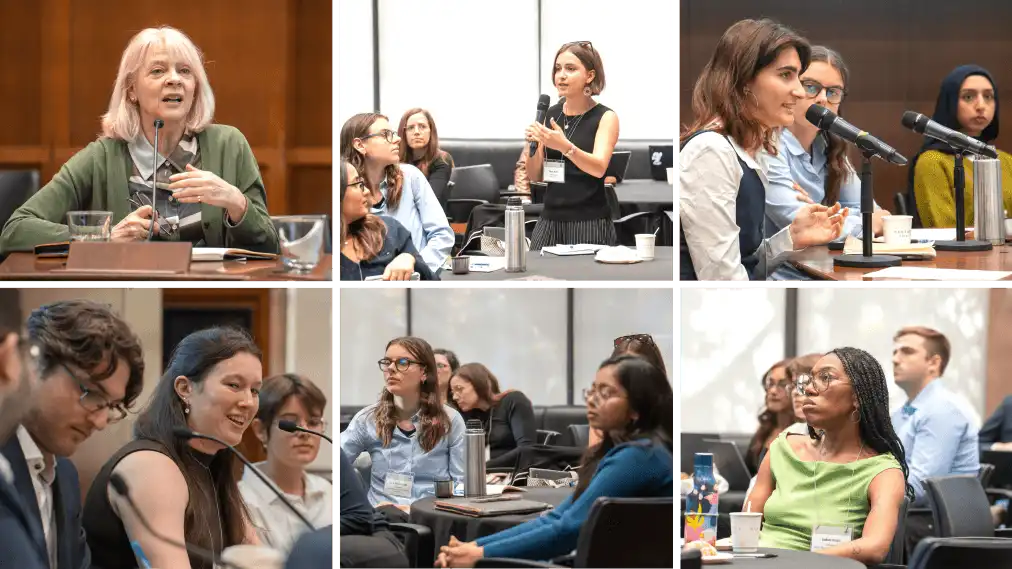
Following a five-month research phase, the CARE Urban Resilience project culminated in an in-situ study tour and final symposium held in Toronto from 26 to 29 October 2026. During the symposium, participants presented their findings to academic experts, industry leaders, and fellow students.
Why an In-situ?
The in-situ phase of the project provided a unique opportunity for students across the consortium to come together in person, exchange global perspectives, and engage in activities at the local level.
Study Trips and Shared Local Experiences
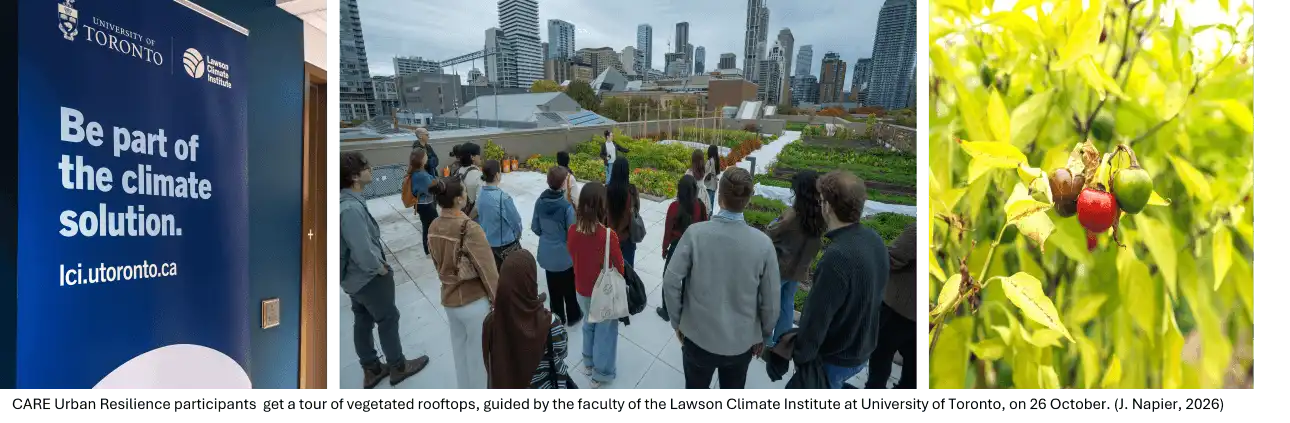
Prior to the Symposium, participants joined for a study tour guided by the University of Toronto’s Lawson Climate Institute and explored vegetated rooftops.

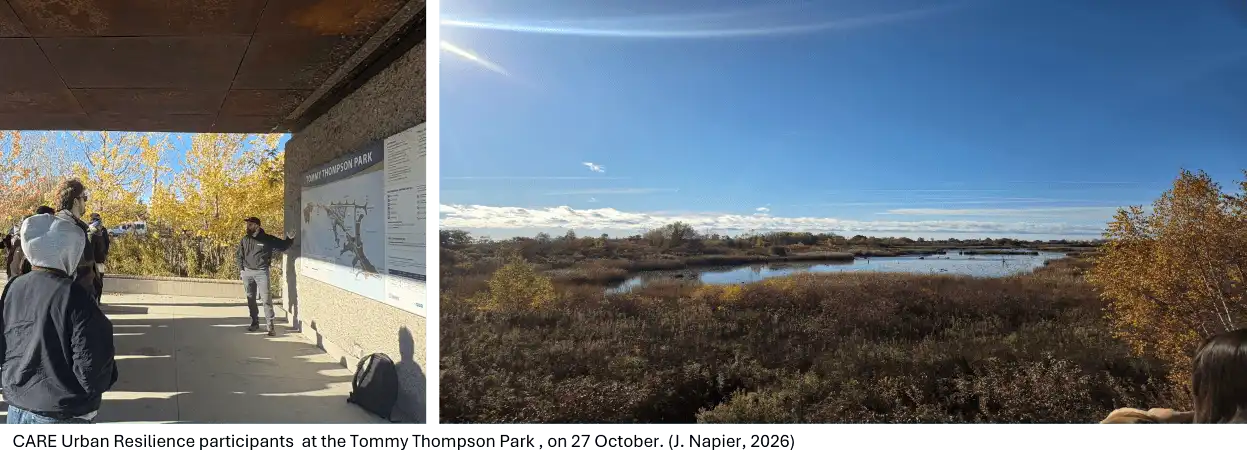
The following day, participants toured the Tommy Thompson park with a guide from the Toronto and Region Conservation Authority.

Exploring Initiatives Around the World

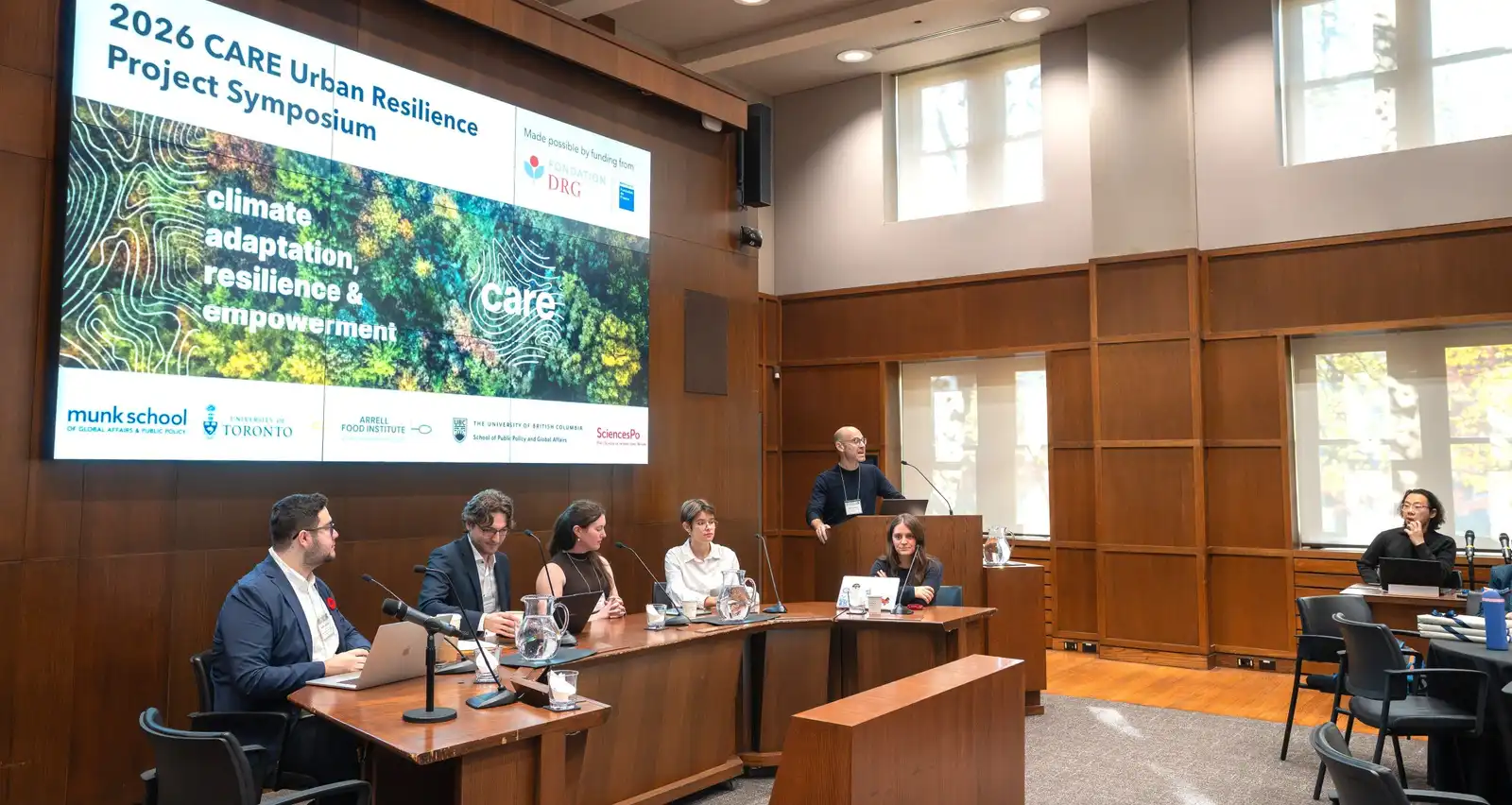
On the last day of the in-situ phase, on Thursday 29 October, students gathered for a full day symposium to present their findings and exchanges perspectives.
The first half of the morning was dedicated to presentations on green infrastructure. G. Dodge and C. Simoes Coelho (Sciences Po) presented the case of Guimarães, Portugal, while N. Veselovskaya examined Medellin’s Green Corridors initiative, and L. Sanchez Diaz and J. Simons (U. of Toronto) explored Mexico City’s Green Infrastructure Network Program.
The morning session continued with four presentations on blue infrastructure. S. Bose and R. Taylor (U. of Toronto) focused on Rotterdam’s Watersquare Benthemplein. They were followed by S. Coladonato and S. Conti (Sciences Po) who presented the case of Rabalderparken in Roskilde (Denmark). S. Li (U. of Guelph) examined Haizhu National Wetland Park in Guandzhou (China). The morning concluded with a presentation by K. Rana and A. Barborini (U. of British Columbia) on the Colombo Wetland Management Strategy.
In the early afternoon, participants reconvened for presentations on social infrastructure, including Honk Kong’s multimodal transit system, presented by M. Rehman (U. of Guelp) ; Vancouver's Resilient Neighborhoods Program, presented by J. Guzman & J. Vines ( U.of British Columbia), and Kyiv’s resilience in Ukraine, presented by A.Trygub & L.Coady (U. of Toronto).
Concluding each round of presentations, participants engaged in discussions and Q and A sessions with academic experts, industry leaders, and fellow students.