Home>Community Knowledge and Urban Heat Resilience Inside the Paris Resilience Studio


9 November 2026
Community Knowledge and Urban Heat Resilience Inside the Paris Resilience Studio
Building Community Resilience Through Applied Research
This semester, as part of the CARE Program, 23 students from Sciences Po École Urbaine and Paris School of International Affairs (PSIA) are taking part in an applied research project co-led by Profs. Nicolas Brunet and Leith Deacon, visiting faculty from the University of Guelph, Canada, and Dr. Céline Cantat, Manager of the CARE Program.
Focusing on urban heat resilience in two working-class neighbourhoods of Paris, the Studio explores how the impacts of extreme heat are shaped by social inequalities, including housing conditions, age, gender and migration status. It also examines how residents' experiences and local knowledge can inform more inclusive and community-based approaches to climate adaptation.
The Studio invites students to explore how community-based research can generate knowledge about urban heat vulnerability and inform more inclusive climate adaptation policies. Working across different scales of governance, students develop skills in identifying vulnerabilities, engaging with local knowledge, and designing research approaches that connect community experiences with broader policy challenges.
At its core lies a central question: How can locally meaningful processes and community knowledge help shape decisions at the metropolitan scale? Through this work, students develop practical skills in diagnosing vulnerability, identifying adaptive capacity, designing community-led evidence, connecting research to action, and thinking across multiple scales of governance.
The Studio combined academic instruction, meetings with experts and public officials, and fieldwork in two Parisian neighbourhoods. Following an introductory meeting with the City of Paris on 30 September, students participated in workshops with Nicolas Brunet and Leith Deacon on resilience, community-led science, project methodology and research design. They also met with historian Hajer Ben Boubaker to introduce them to the social and political history of Paris's 18th arrondissement, providing important context for their subsequent fieldwork.
On 27 October, students conducted field visits in the Portes du 18e arrondissement and La Goutte d’Or, meeting with local development teams and community organisations. Drawing on these exchanges and their initial observations, they developed research proposals exploring different dimensions of urban heat vulnerability and community resilience. These proposals were presented and discussed at the Académie du Climat on 4 November.
Understanding Paris’s Climate and Social Resilience Challenges
On 30 September, students took part in a two-hour workshop with representatives from the City of Paris and DTEC, the service supporting the program’s ecological transition dimension. The session provided essential insight into the city’s climate adaptation policies and its approach to supporting vulnerable communities as a valuable background before students begin their fieldwork in Parisian neighborhoods and meet the city’s local development teams (EDL),

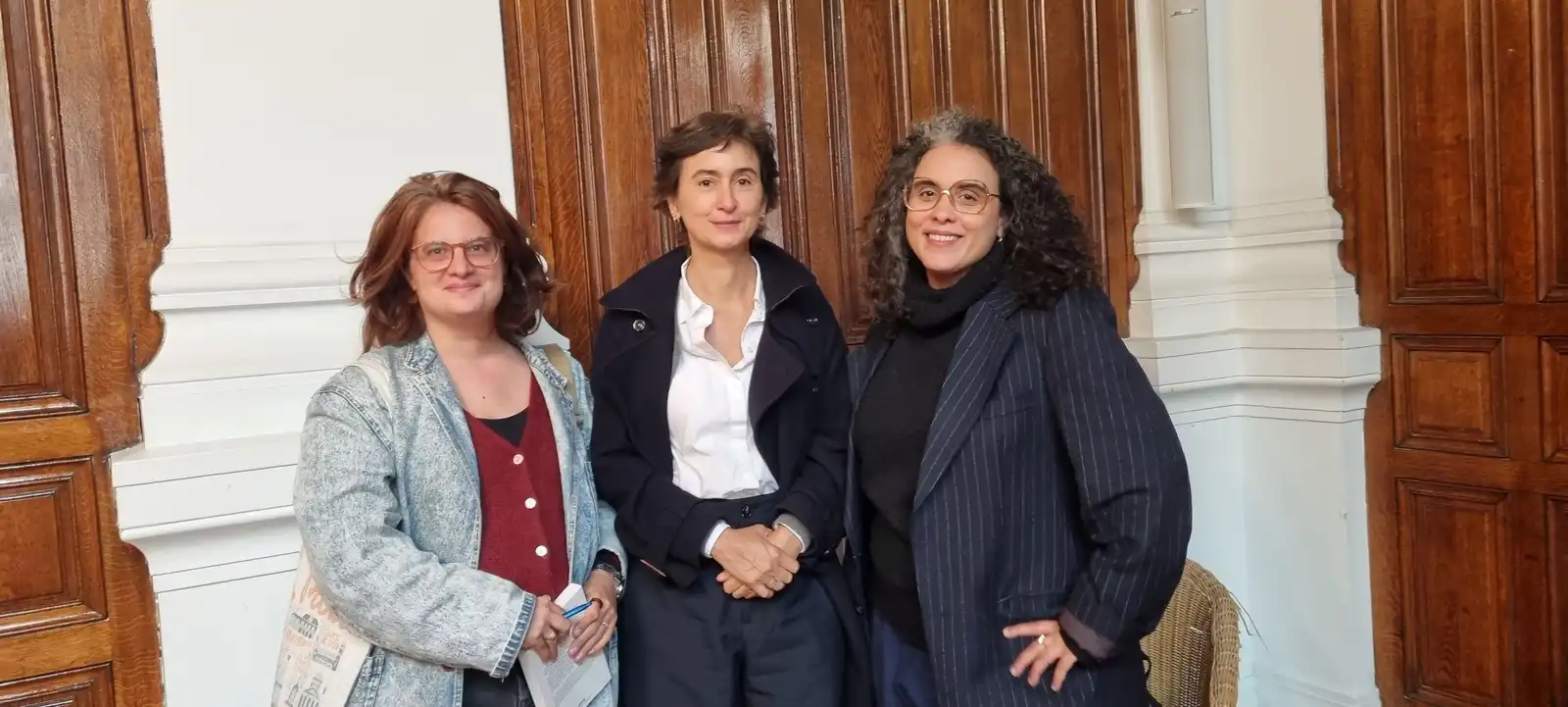
The first presentation, delivered by Camille Bruchec and Marie Rouaux from the City of Paris’s Directorate for Ecological Transition and Climate, explored Paris’s resilience and adaptation strategies.
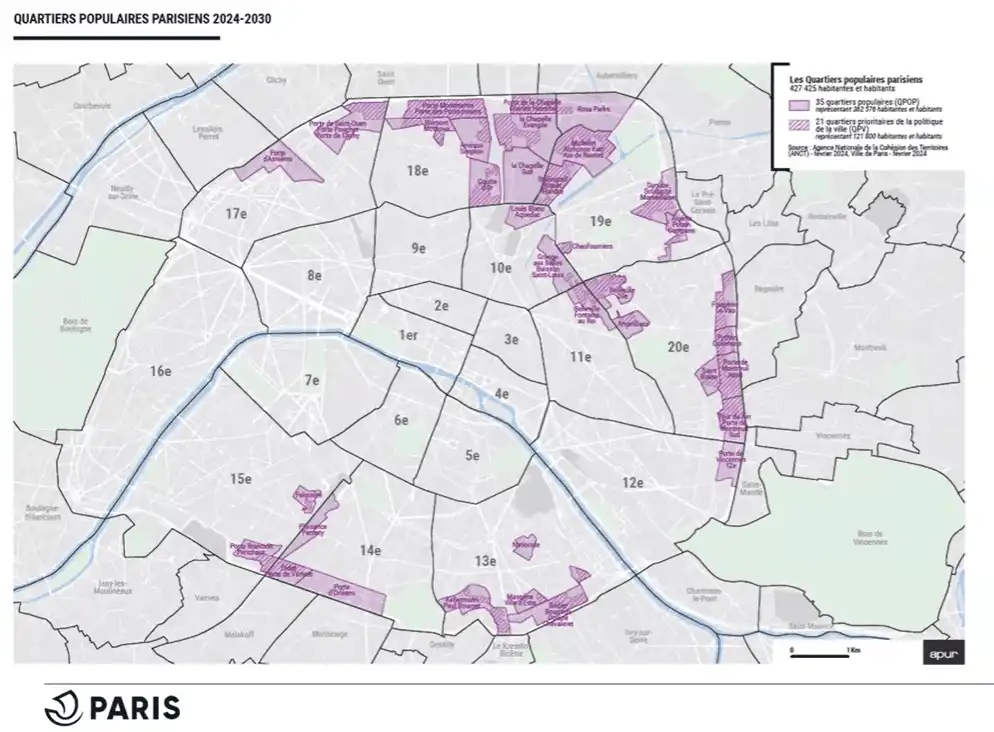
The second presentation, given by Leila Deshuis and Lamya Monkachi, focused on “City Policy and Working-Class Neighborhoods in Paris.” Representatives from the City Policy Department presented the social, economic, and environmental challenges faced by Paris’s popular neighborhoods and explained how the city addresses them through a comprehensive and cross-cutting policy framework. While Priority Neighborhoods (QPV) represent more than 128,000 residents in Paris, the city adopts a broader definition encompassing 35 popular neighborhoods across ten arrondissements, home to more than 360,000 residents. These areas are identified through indicators of social vulnerability, including income levels, unemployment among young people, housing conditions, and family circumstances.

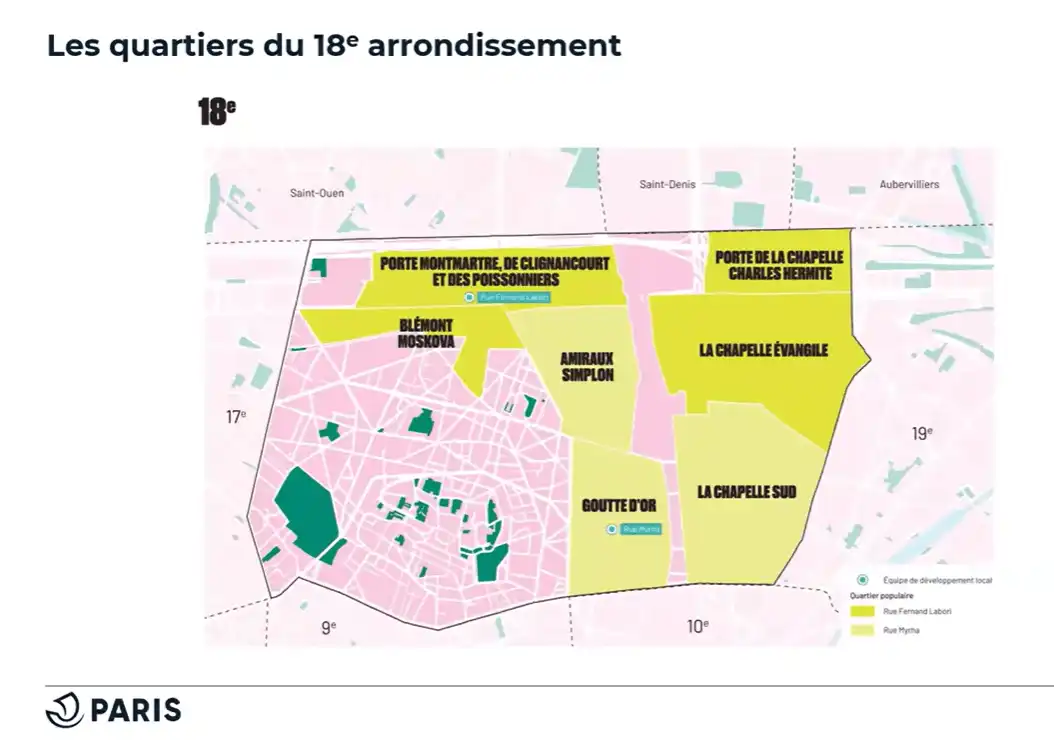
Students were introduced to the Paris Pact for Popular Neighborhoods and the 2024–2030 City Contract, two key policy frameworks aimed at improving quality of life, strengthening social cohesion, and supporting ecological and urban transformation. The presentation also highlighted the role of Local Development Teams (EDL), which work closely with residents and community organizations to design and implement neighborhood-scale projects.
As part of their field visits on October 27, students planned to meet with the Local Development Teams serving the Goutte d’Or and the Portes du 18th arrondissement, to gain first-hand insight into how these policies are translated into action at the neighborhood level.
From Classroom Insights to Community-Based Research in La Goutte d’Or and the Portes du 18e
Before going on field visits, students met with Hajer Ben Boubaker, author of Barbès Blues, for a session on the social and political history of the Goutte d’Or and the 18th arrondissement
Her presentation traced the neighbourhood’s history as a working class and migrant area, shaped by successive waves of immigration, political mobilisation and struggles over housing and urban redevelopment. This historical perspective helped students situate contemporary questions of climate vulnerability and resilience within the neighbourhood's broader social dynamics, rather than approaching urban heat as a purely environmental or technical challenge.

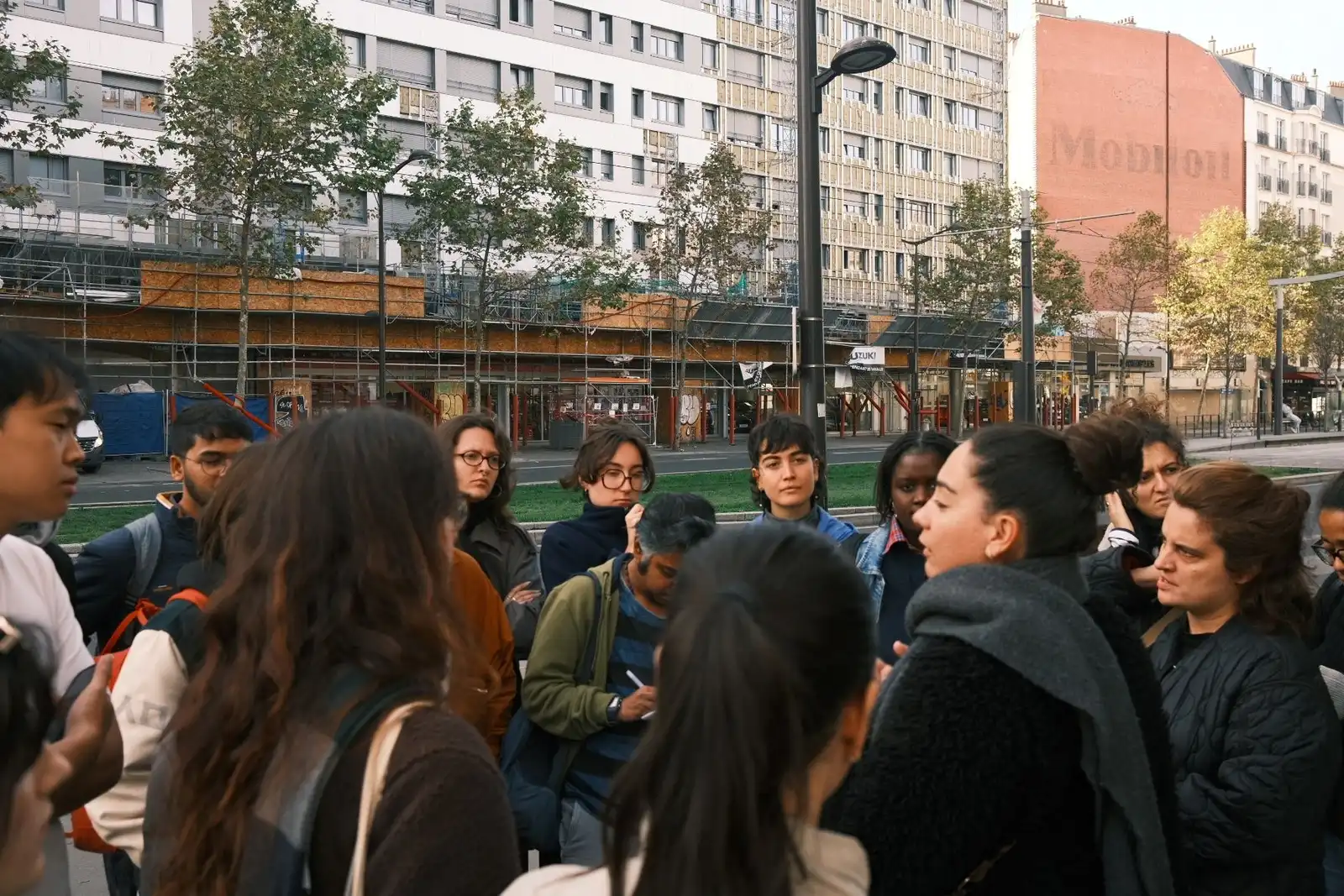
Equipped with contextual insights into Paris’s 18th arrondissement, the City of Paris’ urban policy framework, and the history of La Goutte d’Or, and building on the research workshops conducted with faculty members, each team carried out fieldwork on 27 October. The objective was to gather observations and insights that would help define a research focus and methodological approach.
From Field visits to Research Design: Student Presentations at the Académie du Climat

After moving from classroom learning to field-based inquiry, students reconvened at the Académie du Climat on 4 November to share the results of their research.
Of the six teams, three concentrated their research on La Goutte d’Or, while the remaining three focused on the Portes du 18e. Across all projects, students sought to identify research questions related to community resilience in the face of increasingly frequent and intense heatwaves, and to develop research designs that would enable them to investigate local experiences, vulnerabilities, and adaptive strategies.
Across the six projects, students approached urban heat resilience through the experiences of different groups and communities, paying particular attention to how vulnerability is shaped by social inequalities. Their proposals explored the intersections between heat exposure, housing conditions, migration status, gender, age and access to public space. Together, they highlighted the importance of understanding climate adaptation not only through infrastructure and environmental interventions, but also through the everyday experiences, resources and knowledge of residents.
The first group examined the integration of newly arrived immigrants into existing community networks. Their proposed research would seek to understand what forms of community resilience to heatwaves already exist, and what barriers newcomers may encounter when attempting to access these resources and support systems.
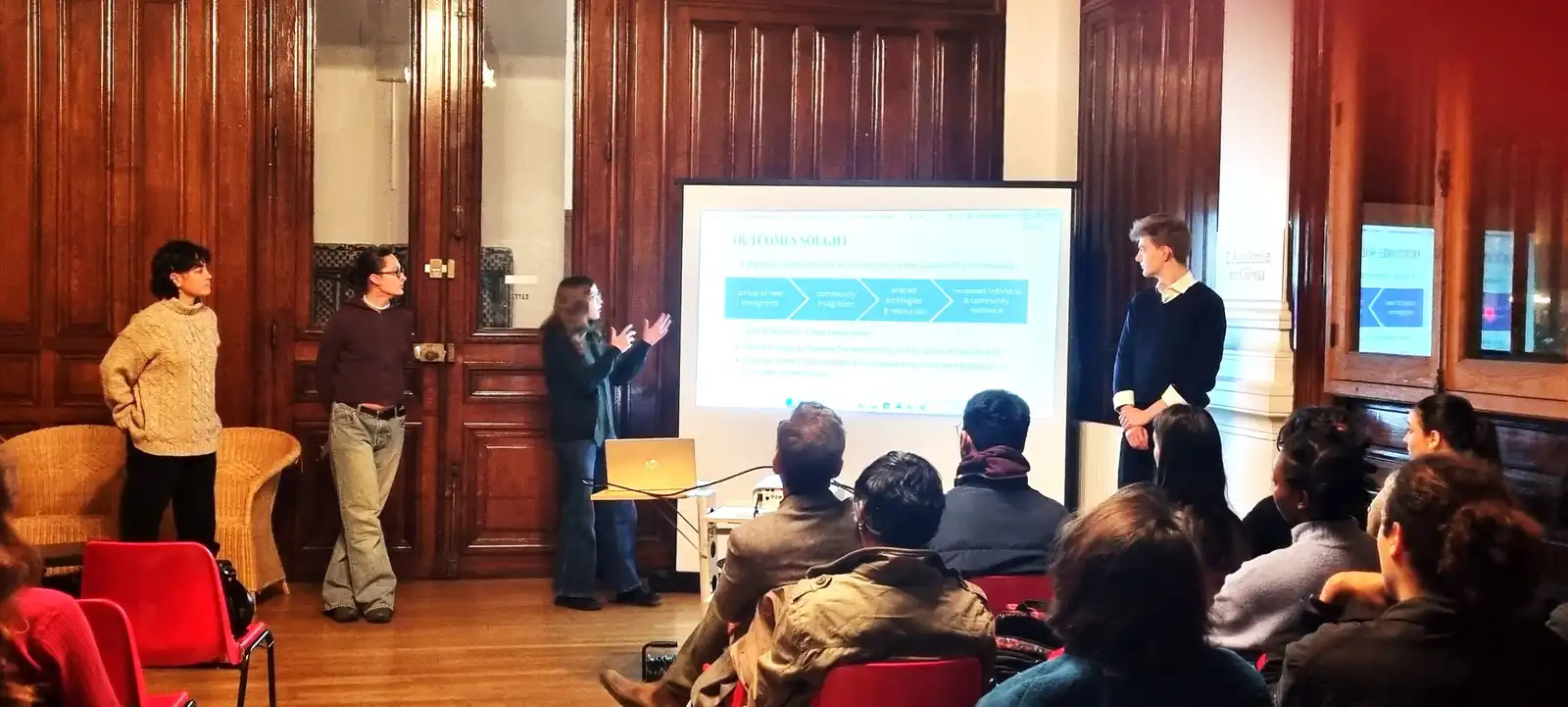
The second group focused on how public and shared spaces can better support mothers and young children during periods of extreme heat. Their proposed project suggests to investigate how the use and design of public spaces in La Goutte d’Or could be adapted to better meet the needs of families during heatwaves.
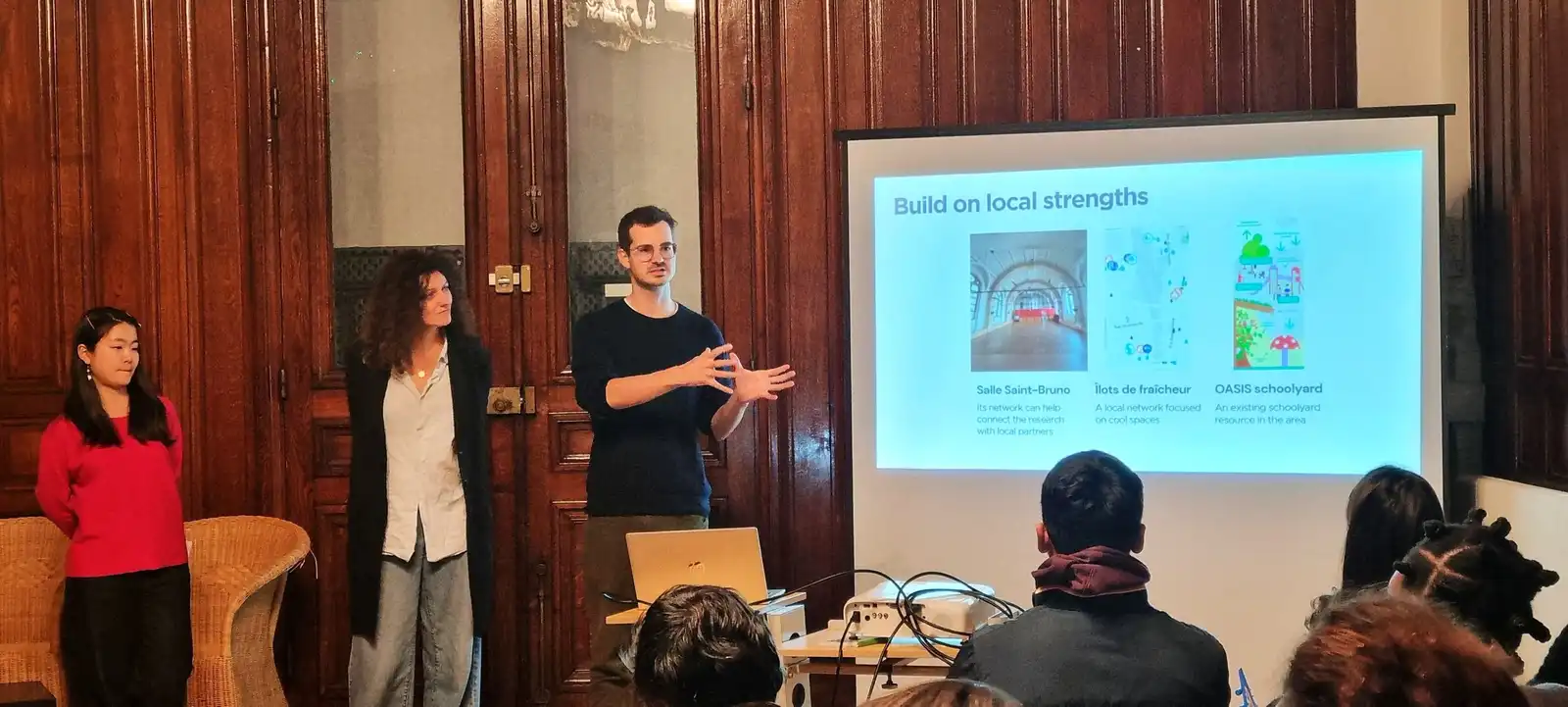
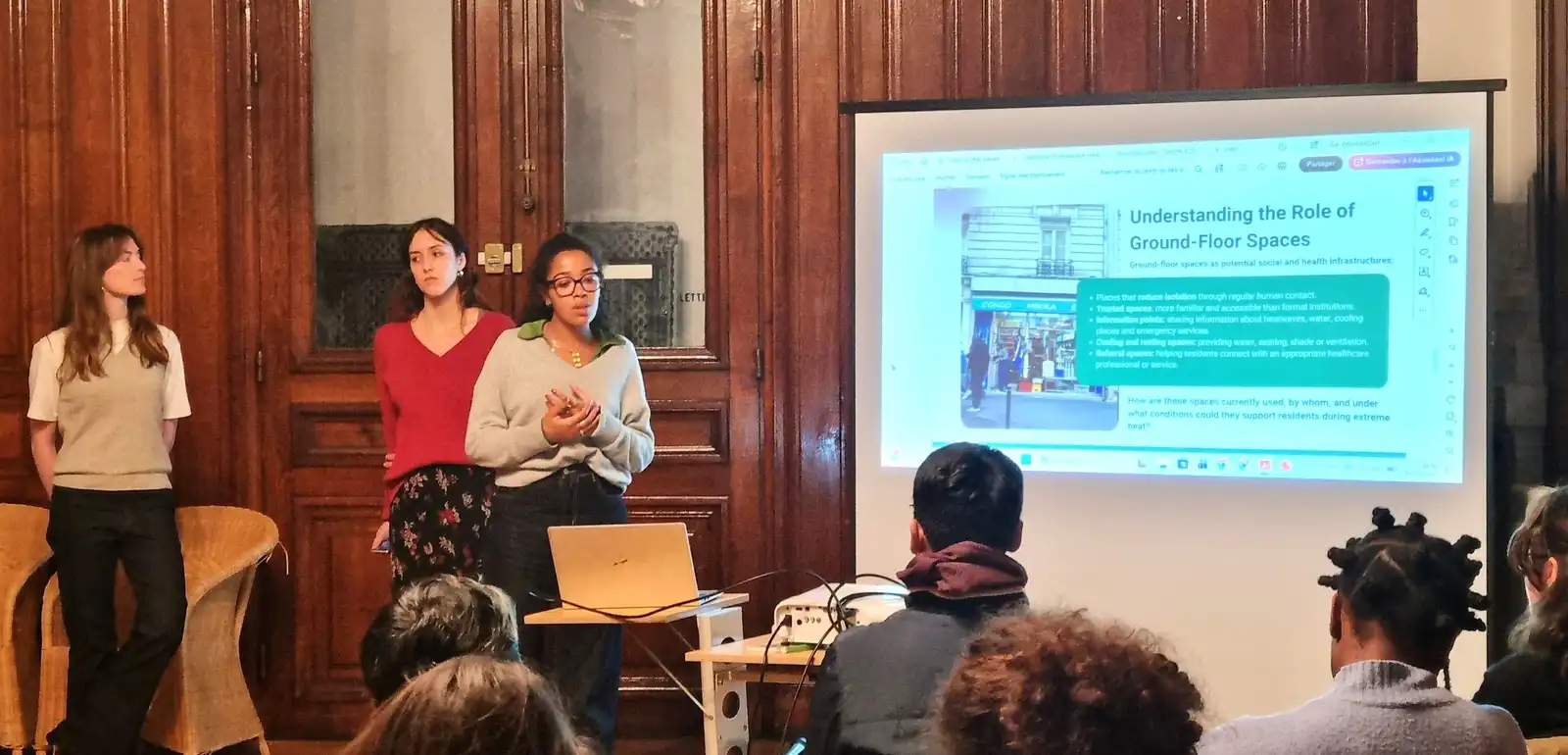
The third group explored the impacts of extreme heat on women’s health in La Goutte d’Or. Their proposed research focuses on inequalities in access to health information and examines the role that ground-floor spaces can play during heatwaves, particularly in supporting residents during heat-related health emergencies.

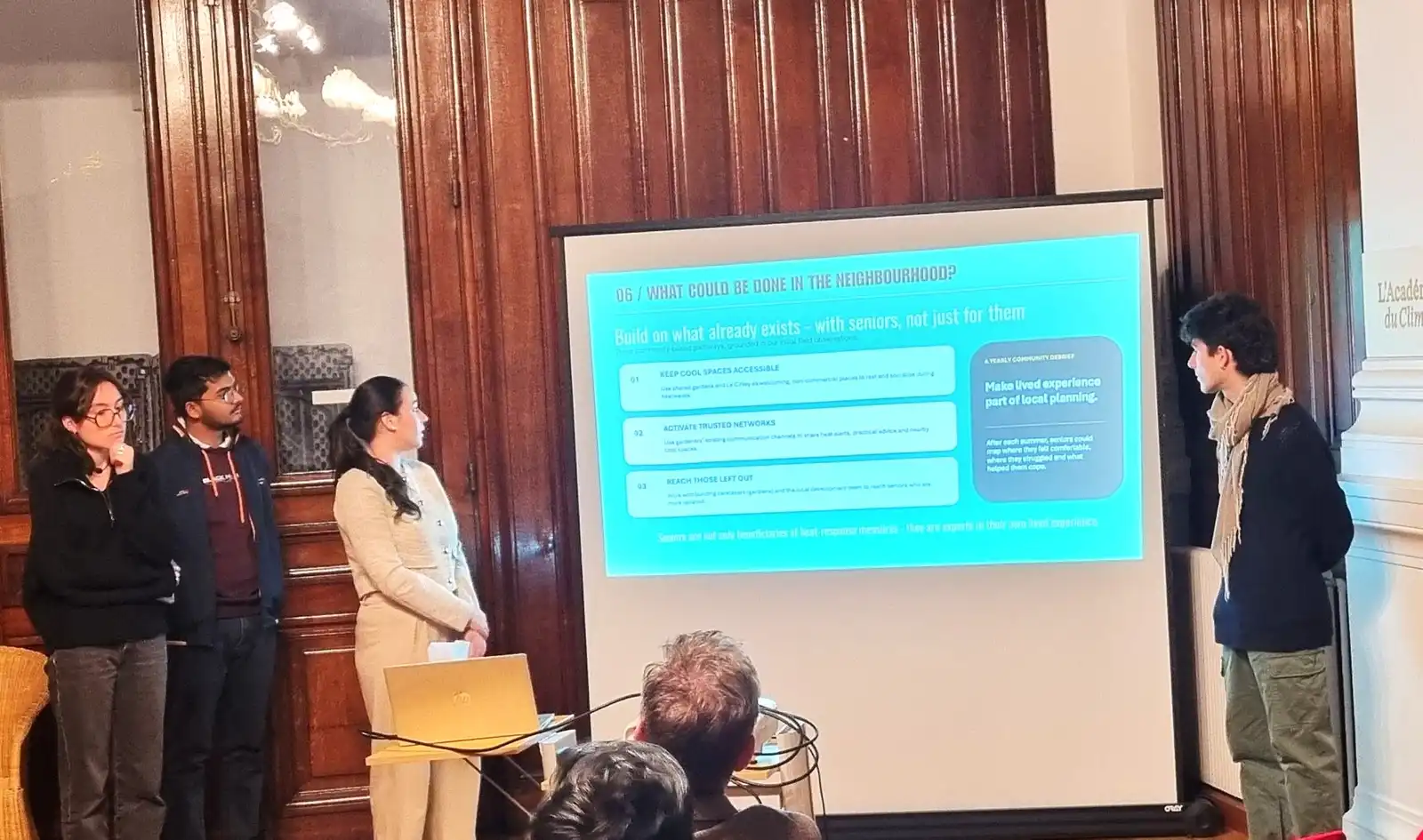
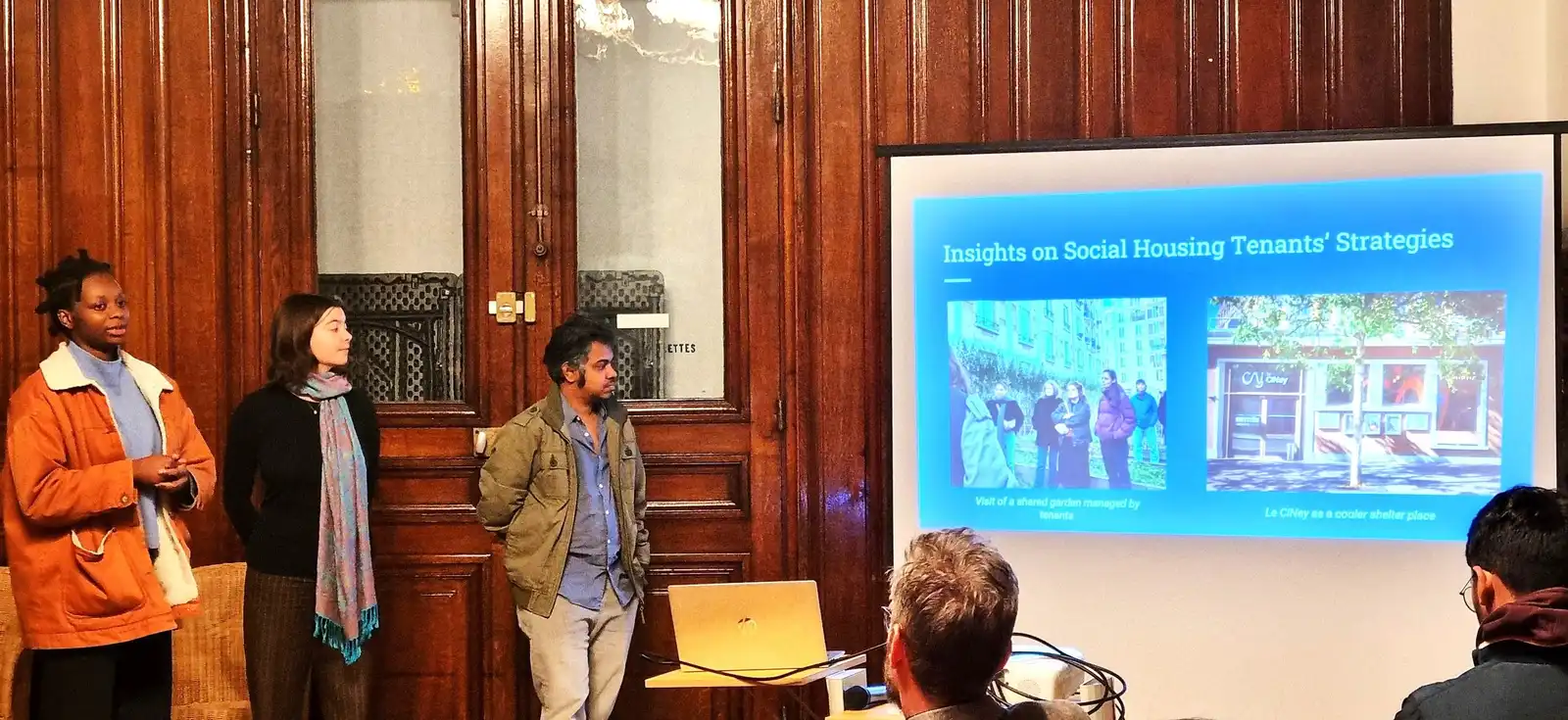
Before presenting their research topic, Seniors’ Vulnerability to Extreme Heat in the Portes du 18e, the team provided an overview of a neighbourhood undergoing significant transformation. The area is home to approximately 15,000 residents, 36% of whom live below the poverty line, while more than 75% of households reside in social housing. Residents aged 65 and over represent 16% of the local population.
Previous field visits to several social housing sites enabled students to gain a deeper understanding of the neighbourhood’s residential landscape and identify spaces commonly used during heatwaves, including shared residential gardens and the community venue Le CiNey. Building on these observations, the group proposed to investigate how existing initiatives supporting older residents could be strengthened through interviews with seniors, local organisations, and community gardeners.

The fifth group focused on the relationship between social housing residents, extreme heat, and resilience-building mechanisms. Their research aims to map existing forms of civic participation, document residents’ lived experiences during heatwaves, and better understand how residents themselves define resilience.

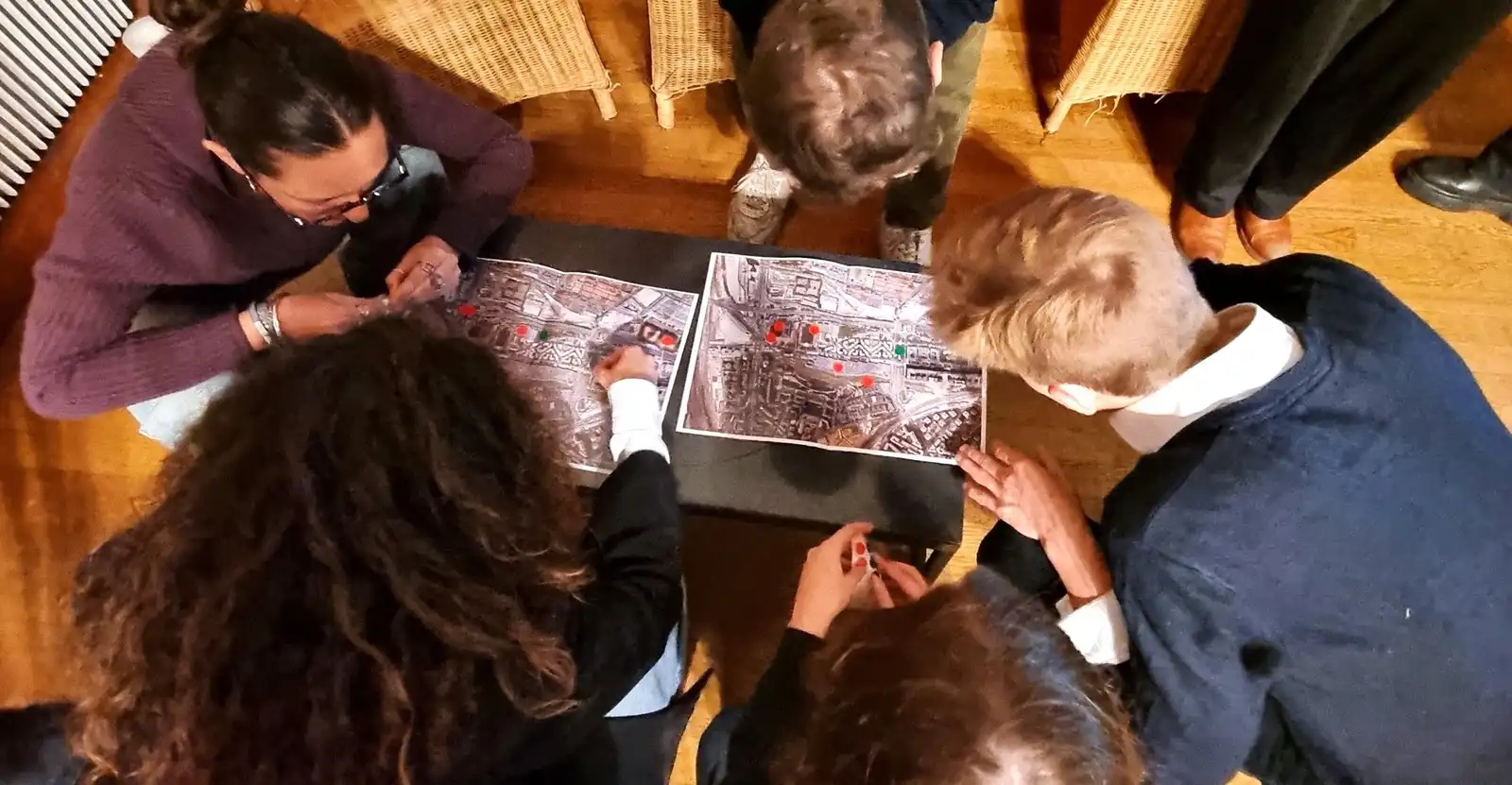
The final group proposed the creation of a collective, jargon-free “map of (climate) refuges” (carte des refuges). The methodology would involve collaboratively sketching maps to identify spaces already used by residents to cope with heat, accompanying residents along their regular cooling routes, and organising collective analysis workshops with tenant associations, EDL, and Le CiNey. During their presentation, participants were invited to take part in an interactive exercise illustrating this approach.

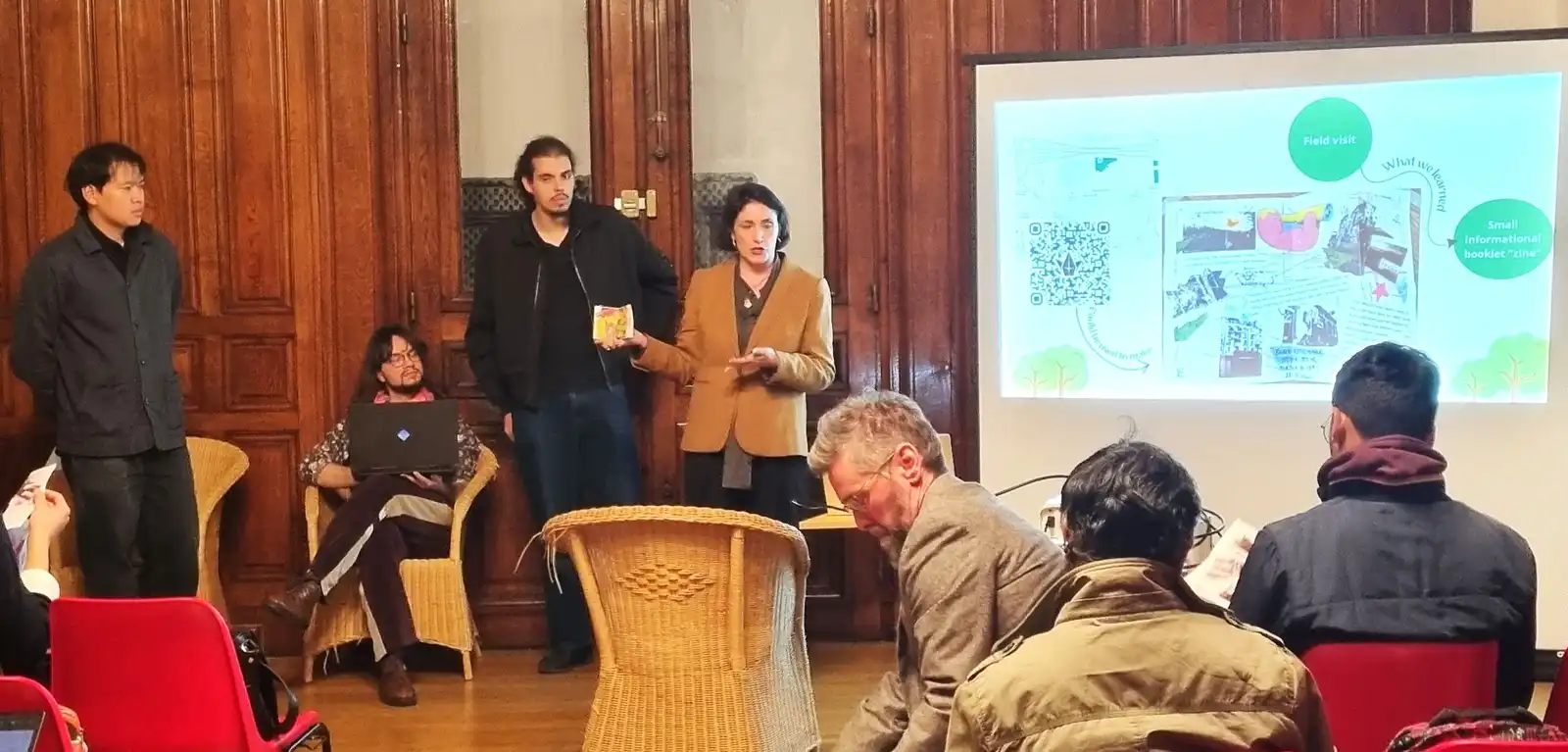

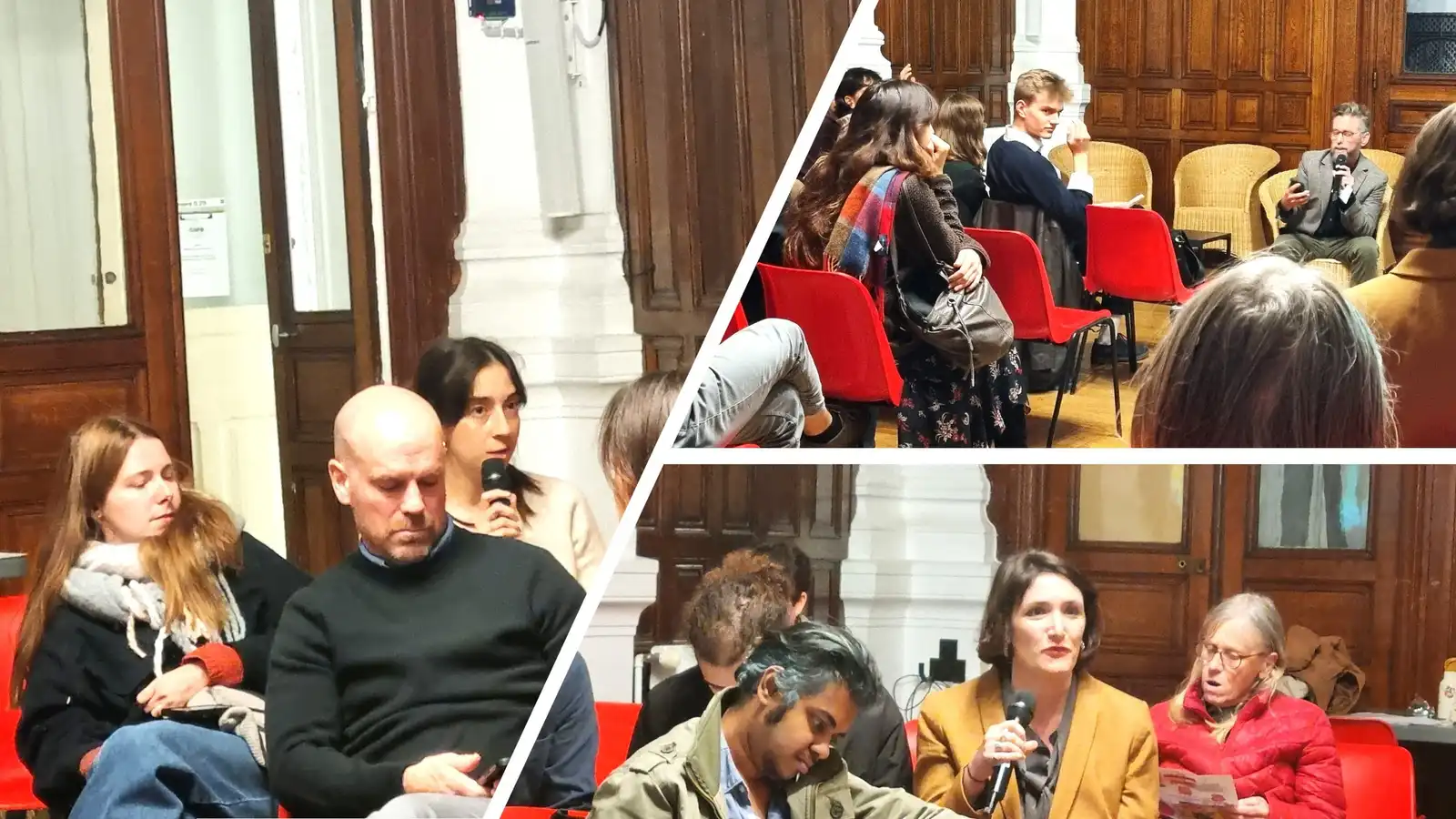
Both sets of presentations were followed by a question-and-answer session, providing participants with an opportunity to discuss the proposed research directions and exchange perspectives and experiences.

The session concluded with several teams expressing a strong interest in continuing their research beyond the scope of the workshop, in collaboration with faculty members and representatives of the City of Paris.