Home>What Counts as Progress? Reflections from Biodiversity COP17


18 November 2026
What Counts as Progress? Reflections from Biodiversity COP17
CARE Instructor Elena Álvarez Blanes shares insights from her experience at COP17
Yerevan, Armenia, 14 October to 1 November 2026
Elena Álvarez Blanes

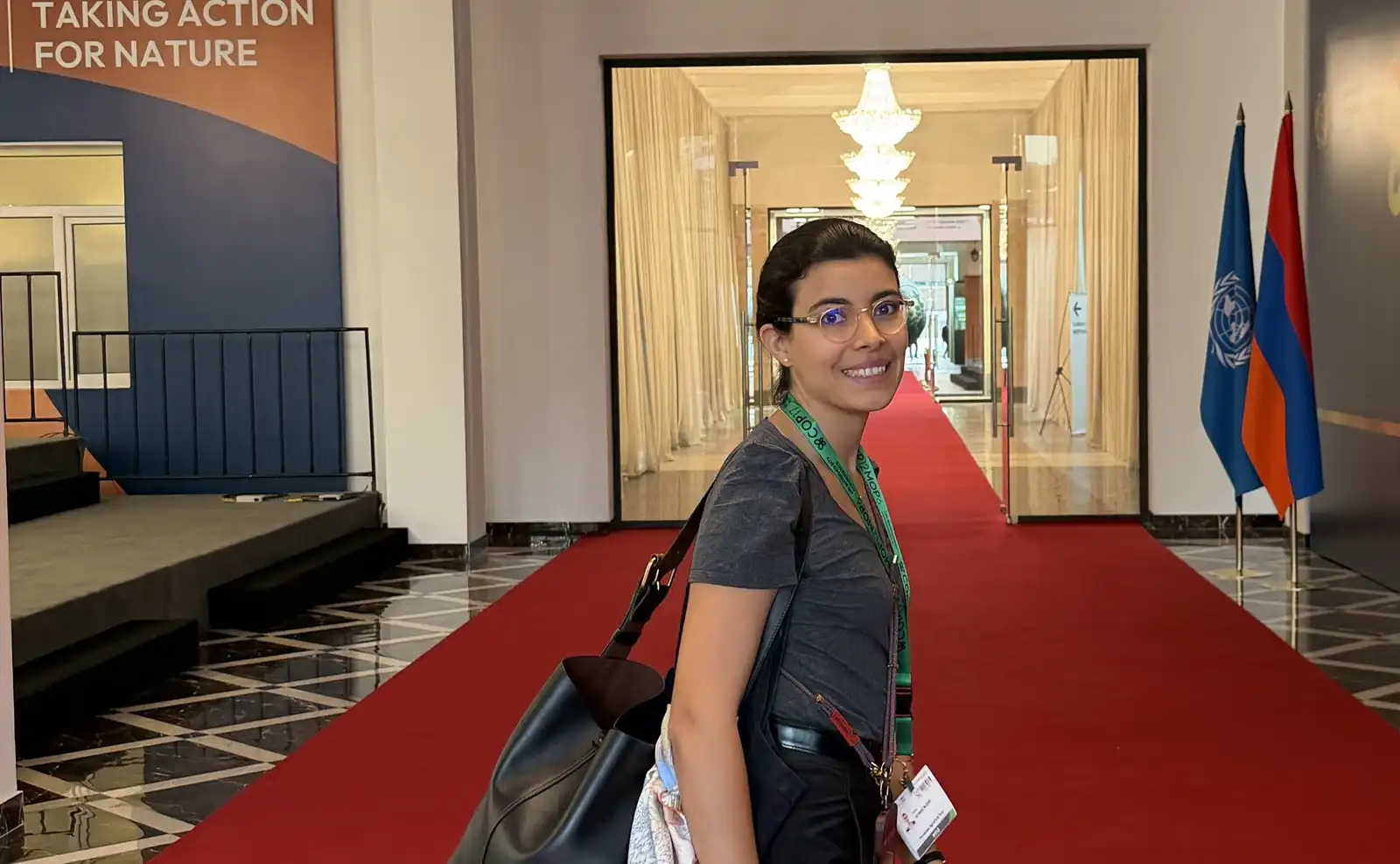
I attended COP17 in Yerevan in two capacities: as a doctoral researcher continuing my ethnographic work on biodiversity accounting, and as a Contact Point for the Academia and Research Organisations (A&R) group. As an observer, I followed all negotiation groups open to observers on the Global Review and on the planning, monitoring, reporting and review arrangements, as well as 33 related side events. These settings provided material on how nature is quantified and reported, what counts as evidence, and how diverse knowledge systems inform decision-making.
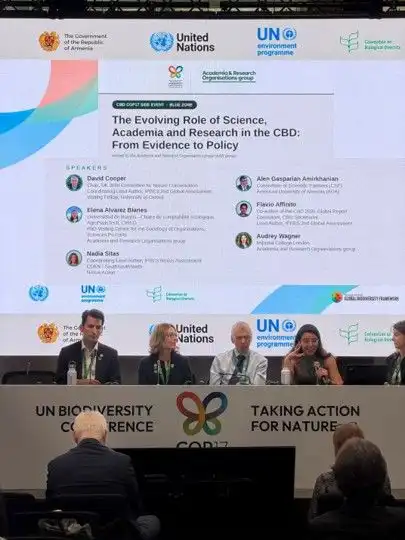
At the same time, as partnerships lead for the A&R group, I helped organise the group’s Hub programme of more than 40 events, featuring over 150 presenters and contributors. I also co-conceived and contributed to three events on the role of science in the CBD, collaboration with GEO BON, and the future of A&R in the Convention on Biological Diversity (CBD) and coordinated the group’s opening and closing statements for the COP main plenaries, each signed by more than 80 institutions. The A&R group’s COP17 page provides further details on its events and participants. This piece draws on these observations and activities to consider questions of quantification, accounting and accountability for nature, and the role of knowledge production in CBD decision-making.
Personal reflections

At a preparatory meeting for COP17 in Yerevan, someone remarked that there were as many COP experiences as there were people attending. It captures the distance between the black-boxed decisions once they are out, agreed and consulted by governments, students, experts… and a COP as a space lived by people day after day (and long negotiation nights), across the two intense weeks and among the 9,312 registered participants according to the official list. Each of us enters different rooms, follows different questions, and takes different routes to engage in conversations with different actors attending - governments, indigenous peoples, youth, women, researchers, academics, experts, private and financial sector actors, standard setters, etc. What I intend to deliver here is less an exhaustive exercise than a tentative attempt to organise the most striking and central topics I encountered at my COP.
Looking back, what stayed with me was the way several tensions ran through the COP. Science was repeatedly invoked, yet its authority and role in negotiations remained contested; recognition of Indigenous Peoples and diverse knowledge systems advanced, while inequalities in participation and representation persisted; and reporting and disclosure became more organised, while discussions of harmful incentives and finance exposed how difficult it remains to address the structures driving nature loss. I encountered these tensions both as an ethnographer, tracing how they emerged and evolved across negotiations and events, and as a participant helping create spaces for A&R and a collective science voice at COP. A language of “gaps” offered a thread through these reflections: what appears to be missing - i.e. data or capacities - may also reflect political choices, power imbalances, resistance, or a lack of willingness towards transformative change, as treated in one of the IPBES assessments.
Experiencing the COP within two main standpoints: ethnographic work and making space for science’s single & collective voice
As part of my doctoral journey, I have been following these spaces since Cali in October 2024. I work on how nature is understood and incorporated into indicators across scales and among different actors. At the global level, I’ve closely followed the construction of the monitoring framework, which this year produced national reports and a global review to track progress on actions to halt biodiversity loss. At the local level, I work with indigenous partners to identify what counts for them and to make their territorial practices of care for nature visible. In Yerevan, I attended as both an observer, continuing my own research, and a contributor to strengthening the A&R group. This self-organised group, which I joined in 2024, was revived in 2022 in Montreal to bring together all the science actors present at these multilateral spaces. I see the A&R group as a space where researchers and academics across disciplines working on biodiversity could find one another, speak more clearly in political spaces, and protect science’s role in informing decisions. Compared to Cali, I kept my ethnographer hat on, but I also took a more proactive role, helping to make one small part of COP possible.
Organising the Hub and our events meant thinking about who was present, whose expertise could be heard, and how a scientific community might act together without pretending to be uniform. We struggle with who participates in these spaces and with the material reasons why valuable people from A&R cannot attend, which makes visible the challenge of underrepresented regions at COPs. At the same time, I wanted to keep an ethnographic eye on COP17: which continuities and evolutions could I track among the actors I’ve been following for the last three years around accounting for nature?
Members of the A&R group and I organised two conversations. Both conversations asked, with different partners and at varying levels of granularity, what it means for science to take part in a COP and how the A&R can foster a unified presence in these arenas. I also volunteered to lead the drafting of a statement on behalf of the A&R community, which began in February early this year and was to be delivered in plenaries at COP17's opening and closing sessions to amplify our collective voice.
Counting biodiversity: reporting, finance and responsibility
The first global review of collective progress under the Kunming-Montreal Global Biodiversity Framework provided the COP with a shared account of how far implementation has to go. The CBD’s State of Biodiversity Action report draws on national reports and other evidence to assess progress against the framework’s targets; the COP’s closing account and Yerevan Pathway set out the agreed direction for the next stage. Although we started knowing that we were not on track (see, for example, the reflections by vocal references of these spaces in Science), Hub presentations and conversations showed that State and non-State actors’ reporting practices clustered around targets mostly focused on increasing protected land areas and biodiversity knowledge and data availability. The GBF monitoring framework’s headline indicator 18.1 counts positive incentives in place, and Parties more commonly reported steps to scale these up than reductions in harmful incentives. This can be considered a warning about selective reporting. It is easier to count what institutions already know how to do and the creation of new markets than to account for deeper changes that require reforming or eliminating harmful practices. More broadly, the underlying causes - what a colleague in political ecology qualifies as a euphemism for capitalism - of biodiversity loss have not really been tackled. Doing so would require not only increasing positive impacts but also dismantling the historically rooted consumption and production structures and renouncing long-lasting promises of abundance and free will in our societies.
The same tension appeared in discussions of business disclosure and finance. Target 15 asks businesses to assess and disclose their impacts on and dependencies on biodiversity; Target 14 calls for biodiversity to be integrated into policy and planning. Disclosure can make impacts harder to ignore, but it is not, by itself, a change in practice. At a business event, one of the chairs of the IPBES Business and Biodiversity Assessment argued that the money already exists and only needs to be redirected; we do not need new money. I understood the finance case is not necessarily about finding new funds. But the phrase “redirect the money” leaves another question open: who decides what counts as a good destination, and what happens to the systems that keep sending capital towards harm? Such redirection is precisely the difficult part, the invitation to make transformative changes.
These questions became tangible in the report We Need to Talk About the Elephants in the Room, a civil-society effort exploring four structural issues often pushed to the margins of biodiversity-finance debates: the global financial architecture, harmful financial flows, corporate influence, and market mechanisms such as offsets and credits. Its value for my reflection lies in asking whether the language of a “finance gap” can obscure the flows and power relations that reproduce biodiversity loss. In a different register, UNEP’s State of Finance for Nature 2026 estimates that nature-negative finance vastly exceeds investment in nature-based solutions - a term in itself that has been the subject of much scientific reflection, to ensure its DNA is not misunderstood as a new term in the global biodiversity buzzword dictionary.
Biodiversity credits and offsets brought the argument down to a practical test: what exactly counts as a contribution to conservation? At a side event on social and ecological impacts, speakers raised concerns about additionality, permanence, rights, and how costs and benefits are distributed in these solutions. Then, in the closing plenary, Peru restated its opposition to offsets as a financial solution and proposed analytical work to assess whether they generate additional value for biodiversity. The intervention was recorded in the UN meeting transcript. Together with harmful incentives, these final discussions did not resolve these questions. This is where I feel the distance between a target on paper and its commitments, and the reorganisation of economic life that it implies.
Recognition and proximities: what is changing, and what is not?
The COP also gave me reasons to think that the distance between different communities of practice can shift. Compared with Cali, I saw more conversations crossing institutional and disciplinary boundaries, including exchanges between data-focused organisations and IPLCs. From those encounters alone, I cannot say whether this marks lasting change or whether institutions are learning to use a more inclusive vocabulary. Still, I heard more often that IPLCs are leaders and knowledge holders, not simply beneficiaries. There is indeed a growing recognition and understanding of something that should be obvious by now in today’s connected modern world. Indigenous people are making science that is as valid as Western science and incorporates understandings of nature that might help us better integrate the complexity of this hyperobject so hard to pack into words, metrics, policies… We saw this at COP events, where worlds of highly quantitative models wondered about data sovereignty and community-led initiatives, and market-led, science-based initiatives sat in front of indigenous activists and leaders, listening to ethical principles of collaboration. In Cali, such conversations were less visible and appeared as a distinct world with less common understanding, or at least less knowing and recognising each other as close as it could be desirable.
The adoption of the Sevan Guidelines, the operating rules for the new permanent subsidiary body on Article 8(j), is a consequential institutional step. The CBD’s account of the outcome records their adoption. But a rule alone does not secure representation. Carbon Brief reported that Indigenous representatives regarded parts of the negotiated language on non-state actors as a regression. Agreement on the body’s operating arrangements came only after difficult discussions. Recognition and contestation were present together.
Another front concerned the terms under which knowledges and participation could inform CBD processes. In contact groups, recommendations and references to particular IPBES assessments were difficult to negotiate, with some Parties expressing discomfort with what they saw as IPBES’s increasingly “prescriptive” role. Moreover, Youth representatives expressed concerns about resistance to explicitly naming the groups included in the whole-of-society (WOS) approach. Without such recognition, there might be no formal route for requesting those groups’ contributions to the CBD process. In response, several parties, rights-holders and stakeholders had to push to prevent a setback to science’s role and WOS in these processes.
Science-policy interfaces such as IPBES organise global assessments of available evidence; the WOS approach recognises that groups with different knowledges and experiences also have a contribution to make. This democratic approach to multiple sources of evidence makes the CBD rich and quite unique for decision-making. Growing resistance from some parties is echoed in S. Dutreuil’s article in Le Monde, where he explains why science is increasingly under attack in these arenas. He argues that environmental sciences become targets when they no longer serve political and economic powers, but instead document the damage and limits associated with public and economic choices. The second resistance to naming specific stakeholders raises a related question about whose knowledge and participation are given voice and influence in multilateral decisions.
Conclusion: What I took with me

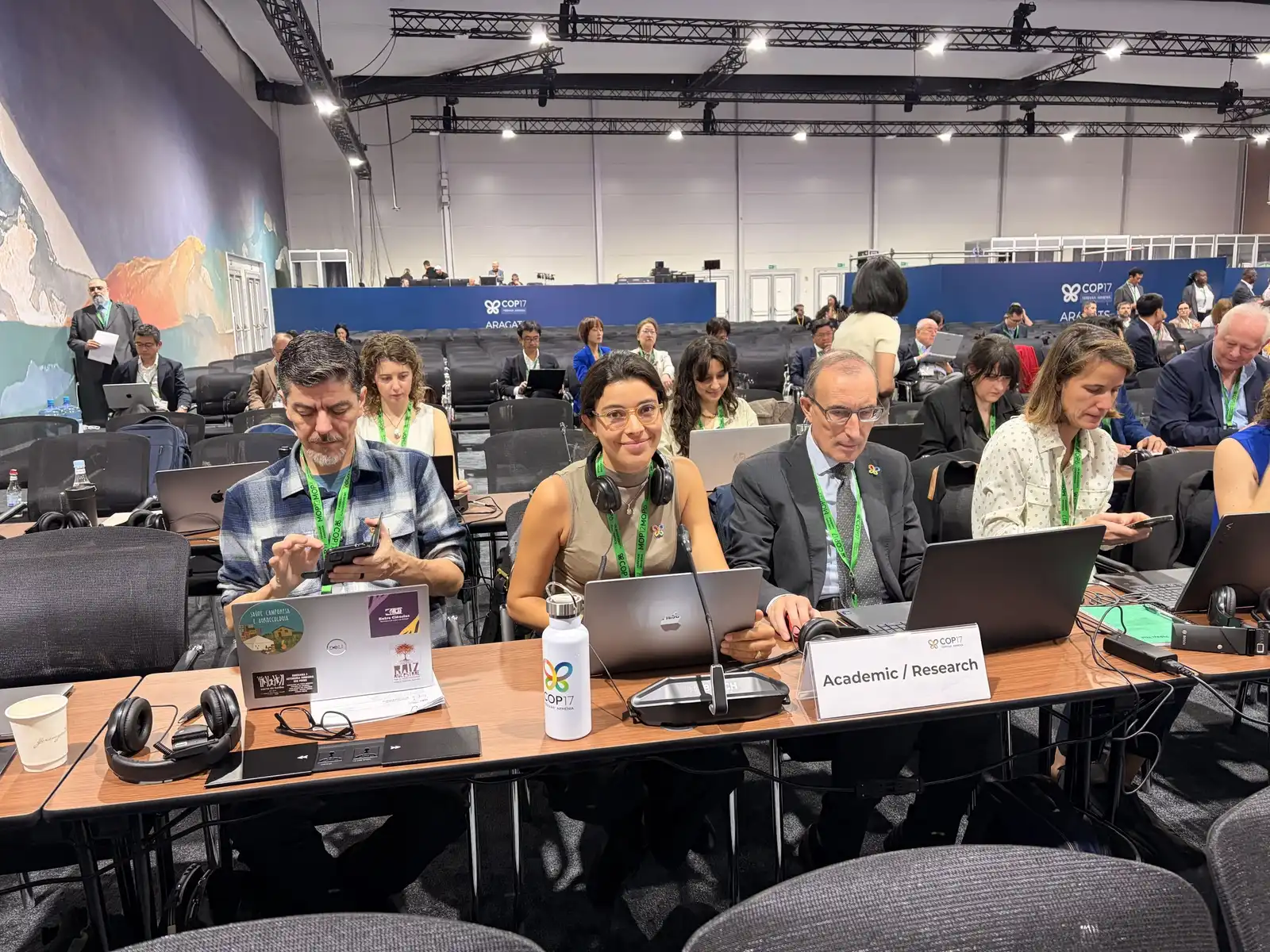
Throughout COP17 discussions, I often heard talk of gaps - in data, finance, incentives, ambition, and understanding(s). The Panamanian delegate gave the last of these a sharper meaning in the closing plenary. Speaking in Spanish - but lost in the English transcription - she recognised that different ontological and epistemological approaches had shaped processes that made consensus difficult. I thought that pointing out existing gaps can help name what is missing, but it can also make very different problems sound alike. A gap in monitoring is not the same as a gap in justice; a lack of information is not the same as a lack of political will in the current geopolitical context. The deeper conditions behind biodiversity loss remain difficult to confront directly. Yet, as mentioned above, I did see people making connections across positions that, in Cali, had seemed much further apart. Even if I hold that as a small, situated observation, I, regretfully, cannot account for the bigger picture of a system that is changing too slowly. In the end, this is more a single mosaic of the back-and-forths of biodiversity governance.
Paradoxically, I must acknowledge that I left inspired by the bright minds and generous relationships I found, and by the solidarities that can be built in such imperfect spaces. I also left aware of how much I do not know and convinced of two essentials. First, the need for more humility - a word that emerged frequently in some exchanges - to learn from every knowledge holder, notably those who disrupt and allow us to innovate in our thinking within these spaces; I refer to Women, IPLCs and Youth actors, because each, in their own way, embodies the questioning and revision of the status quo of State-centred governance and the power structures that accompany this configuration. Second, the courage to continue through frustration and the backlashes we face - as sometimes we were defending basics such as the importance of multilateralism and cooperation, and the needed contribution of sciences and diverse systems of knowledge informing decision-making.
We must also remember that beyond the two weeks of negotiating ideas, ambitions, plans, and reports, some losses are materially irreversible; no financial instrument can bring back what has already disappeared. Interestingly, COP ends on the night of Día de los Muertos, a world-renowned Mexican festivity to commemorate those who have left. Moments before the COP17 closing plenary, a group of activists and Youth members represented at COP performed “The Seed”, recalling that “when the last tree has fallen; And the rivers are poisoned; You cannot eat money”. Hours later, on the plane back home, Violeta Parra’s song “Gracias a la vida” came to my mind as another way to end with gratitude without denying sorrow, admiring the human brain as the lyrics recall. The same human intelligence can produce ever more sophisticated arguments to keep business as usual or help us trace and unpack the complex relations between biodiversity loss and social structures.
The distance between our commitments and the ecological reality gives the work its urgency. Our commitments after Yerevan must be firm even if uncomfortable: to keep making room for knowledge in its plurality, to question what our systems count as action, and to keep pushing, from whatever position we occupy, for changes that materially reach the causes of nature’s life losses.
Acknowledgements and publication note. My participation in COP17 was made possible by funding from Sosteninfo VI research project (PID2024-1561350B-I00) from which my PhD is funded and by the badge accreditation provided by Fondation AgroParisTech.
This text is published in two versions: a longer version, including the section on accounting research, on the Chaire de comptabilité écologique website; and a shorter version mainly focused on my personal reflections on the CARE website.