Home>Empowering Future Environmental Leaders: Reflections from U of T’s CARE Student Fellowship Recipients
9 October 2025
Empowering Future Environmental Leaders: Reflections from U of T’s CARE Student Fellowship Recipients
Each year, a select group of Masters students from the University of Toronto receive CARE Student Fellowships to support their pursuit of research or unpaid internships focused on environmental sustainability, climate change, biodiversity, or energy transitions. This summer, three, three CARE Student Fellowship recipients explored their passion for climate action through these opportunities, shaping their perspectives and future paths in meaningful ways.
Kathryn McQuillan, MGA Graduate: Financing Climate-Health Solutions at the OECD


Kathryn McQuillan interned at the OECD in Paris where she tracked global public goods expenditure and supported G20 initiatives on climate-health financing, pandemic preparedness, and health security. Her work explored how governments can collaborate to address climate-driven health threats.
Kathryn reflected that “one of the most eye-opening moments was sitting in G20 meetings and listening to ministers of finance, health, and environment debate how to respond to climate-driven health threats. A “One Health” approach, which recognizes that human, animal, and environmental health are inseparable, was central to these discussions, yet I saw firsthand how difficult it is to prioritize when today’s economic climate channels more funding toward defense than environment and health. That contrast made our work on sustainable health financing feel even more urgent.”
Living in Paris gave Kathryn a fresh perspective on how sustainability can be woven into everyday life. She was struck by “how France prioritizes public transportation, walkable cities, and preventative health measures as part of its broader sustainability agenda. Experiencing these differences firsthand deepened my understanding of how policy choices shape culture and daily life, and it challenged me to consider new approaches Canada could take toward sustainability.”
Jennifer Li, MGA Candidate: Corporate Engagement for Climate Action


Jennifer Li interned with the Forest Stewardship Council (FSC) Canada, where she researched corporate sustainability strategies. Her work involved analyzing corporate policies and assessing their suitability for partnerships and sponsorships that support forest protection initiatives.
“This experience deepened my understanding of how complex corporate roles are in advancing sustainability,” Jennifer said. She gained insight into the importance of accountability for achieving genuine progress, especially in the wake of new greenwashing regulations. “Reaching net-zero by 2050 is not just about setting bold targets, but about ensuring those targets are supported by transparent, measurable action.”
The cross-cultural aspect of the CARE Program allowed her to compare corporate strategies across Canada and engage in discussions with FSC France, revealing how regional values and regulations shape environmental responsibility. “It broadened my outlook and inspired fresh ideas for advancing environmental goals on a global scale.”
Asana Farshchi, MES Candidate: Mapping Environmental Justice in Peterborough


Asana Farshchi conducted participatory research for her master’s thesis on environmental (in)justice in Peterborough, Ontario. Through community mapping workshops, she explored how residents experience environmental harms and benefits in their daily lives.
“My goal was to co-create knowledge that uplifts local voices and strengthens community capacity,” she shared. One moment that stood out was when participants used mapping to connect personal stories to broader structural patterns, showing how environmental challenges are deeply intertwined with equity.
The Franco-Canadian dimension of the program encouraged Asana to situate her work within a broader international conversation. “The cross-cultural aspect of the CARE program opened up space to think about environmental challenges beyond local or national boundaries. Engaging with participants allowed me to reflect on how questions of justice, equity, and sustainability are shared across contexts but also shaped by unique cultural and political histories”.

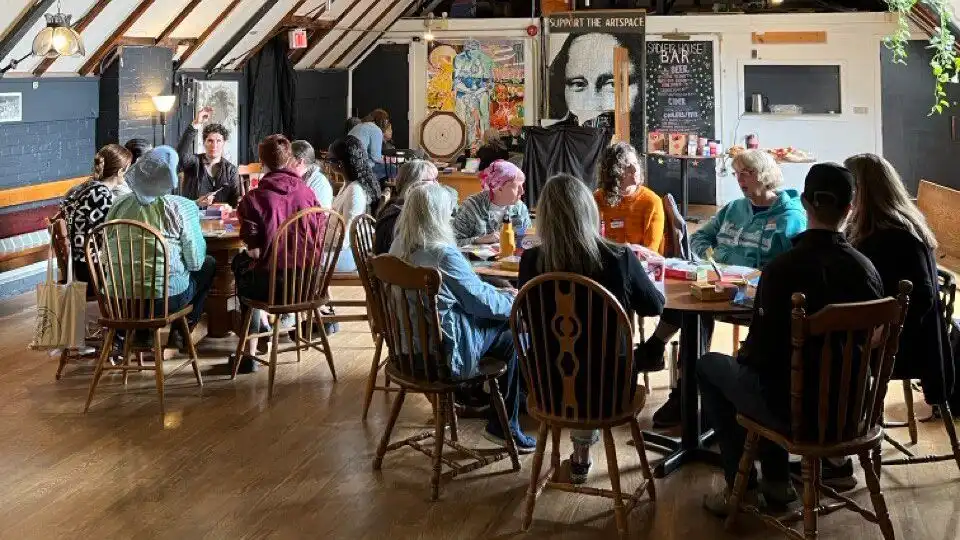
For all three students, the CARE Student Fellowship was more than financial support, it was a catalyst for growth, impact, and clarity. Each recipient emerged with a stronger sense of purpose and a deeper understanding of climate action in practice.
Their advice to other students? Be curious, embrace the opportunity to challenge your own beliefs by exploring climate topics through a comparative lens, and be prepared to meaningfully engage.
As Asana put it:
“Don’t be afraid to be ambitious. This is an opportunity to bring your ideas to life while contributing to a broader community of scholars and practitioners working toward a more sustainable and just future.”